
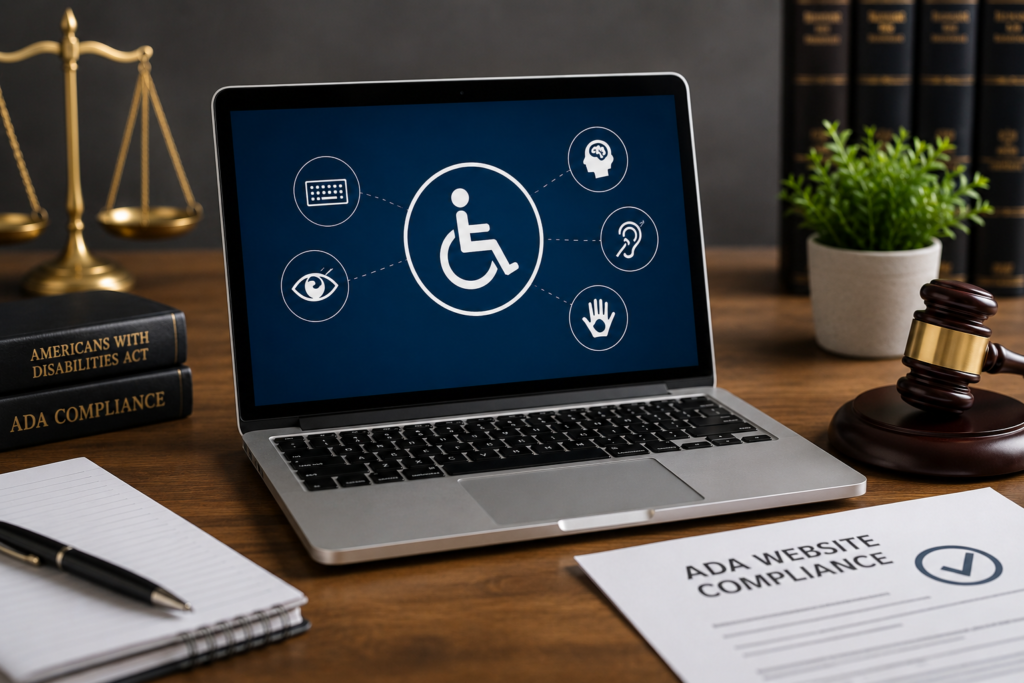
Why Attorneys Need Accessible Websites
Modern law firms rely heavily on websites to attract and convert clients. However, many legal websites are still difficult for disabled users to access. An accessible website ensures that every visitor can navigate content, contact the firm, and access legal information without barriers.
Accessibility is not just about compliance — it improves trust, professionalism, and usability.
What Makes a Website Accessible?
Accessible websites follow WCAG guidelines developed by World Wide Web Consortium.
An accessible website allows users to:
- Navigate with keyboards
- Use screen readers
- Read properly structured content
- Access forms easily
- View high-contrast text
Benefits of Accessibility for Law Firms
1. Better User Experience
Accessible websites are easier for everyone to use, including elderly users and mobile visitors.
2. Improved SEO
Accessibility often improves:
- Heading structure
- Navigation
- Mobile usability
- Site organization
These factors can positively impact search rankings.
3. Increased Client Trust
Professional and user-friendly websites build confidence in legal services.
4. Wider Audience Reach
Millions of users worldwide rely on assistive technologies to browse websites.
Common Accessibility Problems on Law Firm Websites
Many attorney websites contain:
- Low contrast text
- Missing form labels
- Broken keyboard navigation
- Empty buttons
- Missing image alt text
- Poor heading hierarchy
These issues can prevent users from contacting the firm.
WordPress and Accessibility
Many law firms use WordPress and Elementor for website development.
While these platforms are flexible, websites still require proper accessibility setup and testing.
Accessibility Can Improve Conversion Rates
When users can navigate easily:
- Bounce rates decrease
- Engagement improves
- More users complete contact forms
- More leads convert into clients
Accessibility supports both usability and business growth.
Final Thoughts
Accessible websites help attorneys provide better digital experiences for all users. Law firms that invest in accessibility improve SEO, build trust, and create a more professional online presence while supporting inclusive web standards.